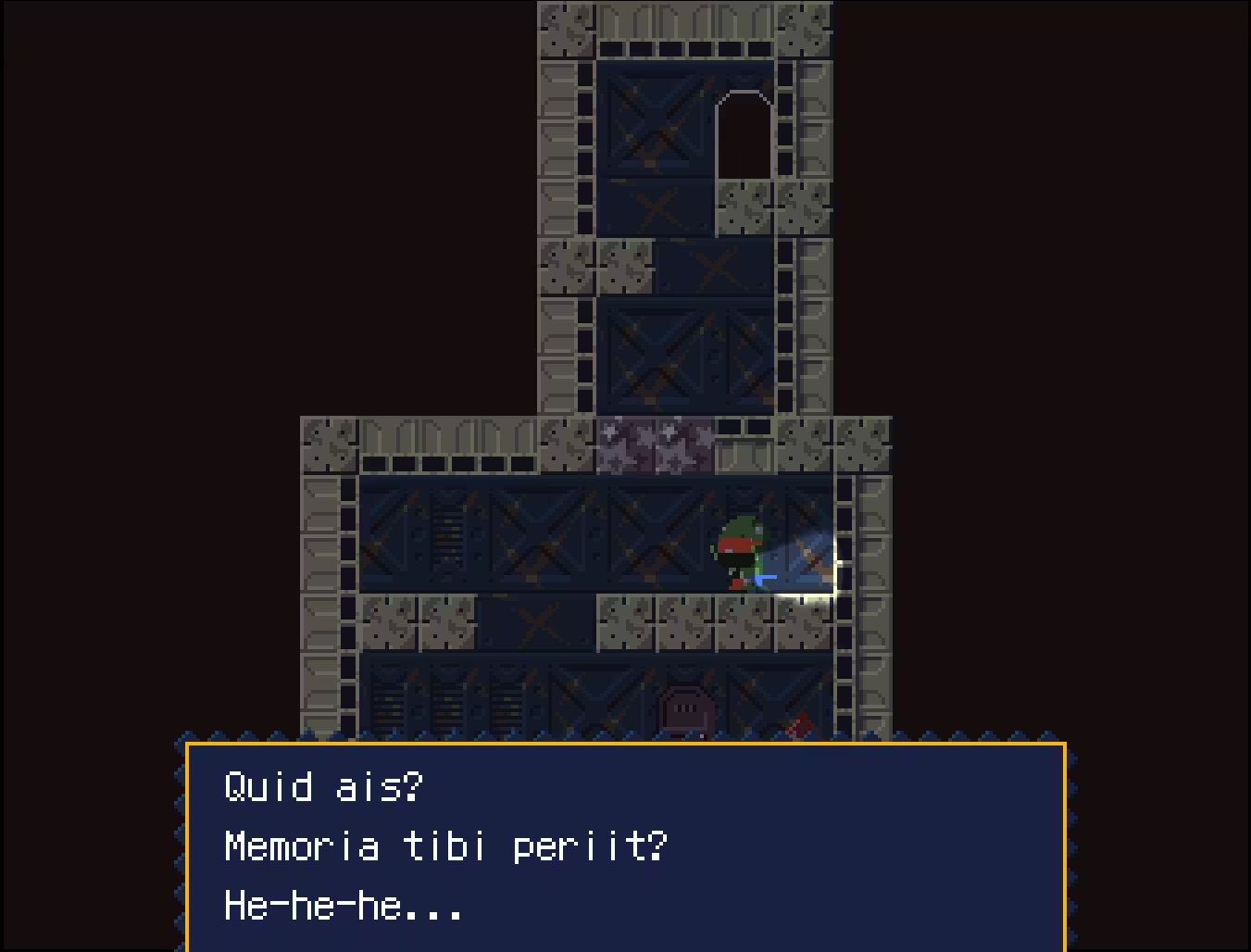
While musing about the potential efficacy of video games for language pedagogy, I was suggested the idea that current LLMs should probably be quite competent at the task of game translation. I figured this would be possible but that they probably would not produce results satisfactory for learning (especially for a language less trained on like Latin). Even so, it seemed like something worth experimenting with. Recently, I had found jan Pawasi's Toki Pona translation of Cave Story a nice way to gain some knowledge in that language, so I thought that the game might be a good test subject.
Immediately, I ran into an interesting puzzle. The game's .tsc files
store all the level data with dialogue interspersed between code. For
example, a snippet from frog.tsc:
<MSG<FAC0015We meet again.<NOD\r\nDo you remember me?<NOD<CLRIndeed, in the Mimiga\r\nvillage...<NOD<CLRI hadn't noticed before,\r\nbut...<NOD<CLRAren't you a soldier\r\nfrom the surface?<NOD<CLRI wasn't aware there\r\nwere any left.<NOD<FAC0000<CLO\r\n
Of course, we can't just throw these files into Gemini and expect it to translate them perfectly. Therefore I did some convoluted lexing to extract the dialogues into hierarchical structure, including the positional ranges of the original text:
[
  {
    "character": "NP",
    "text": [
      [
        "We meet again.",
        { "start": 619, "end": 633 }
      ],
      [
        "Do you remember me?",
        { "start": 639, "end": 658 }
      ],
      [
        "Indeed, in the Mimiga\r\nvillage...",
        { "start": 666, "end": 699 }
      ],
      [
        "I hadn't noticed before,\r\nbut...",
        { "start": 707, "end": 739 }
      ],
      [
        "Aren't you a soldier\r\nfrom the surface?",
        { "start": 747, "end": 786 }
      ],
      [
        "I wasn't aware there\r\nwere any left.",
        { "start": 794, "end": 830 }
      ]
    ]
  }
]
Much better. Using those ranges, we can stitch our edited dialogue back into the files with the original code filled in between.
As for the newlines, these are hardcoded for a funny reason. The textbox has a fixed length, so instead of implementing a line-wrapping algorithm, the game code opts for the simpler method of embedding them in the dialogue. This poses a minor problem for the LLM, but I decided – out of laziness and some curiosity – to simply include in the prompt that lines must be kept under a certain length. Surprisingly, this worked! Well, for the most part.
For a basic localization strategy, I just feed the LLM the whole game text and ask it to generate a few things. The first, a key terms glossary, so that it always translates key terms consistently (e.g., Sue → Susanna, red flowers → flores rubri). The second, a style guide for itself detailing how to handle orthography and such. The third, a short detail of each character's speaking style and a method for translating their dialogue.
Each dialogue is then given to the LLM as JSON. Armed with the generated localization strategy in the prompt, plus its last few translated dialogues, it attempts to produce JSON in return. While I had intended to have it work entirely in one attempt, this proved fruitless when it got hopelessly stuck on particular dialogues. Thus I introduced a fallback maintenance step which simply attempts to correct the formatting of the translation to fit the constraints of the original format. This worked extremely reliably.
I decided to use OpenRouter1 and gemini-flash-3-preview. Though the overall experimentation cost more, a single complete translation of the entire game cost about $0.90. Not bad! Let's see how it turned out.
Immediately, I noticed that some dialogues got missed and remained in English. I thought this might have been the LLM's fault, but it's actually due to my lexing logic somehow treating them as code accidentally. Oops!
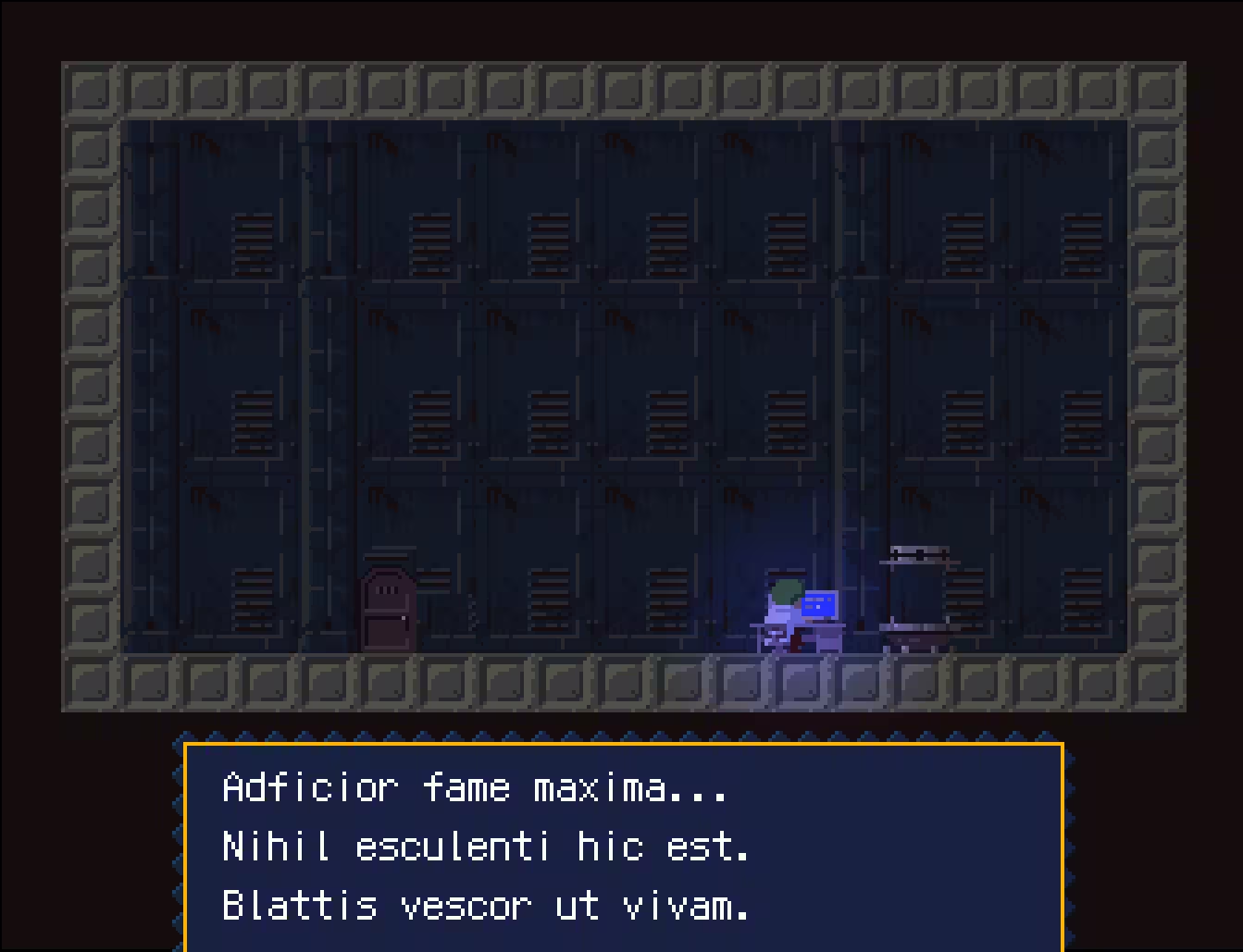
Much of what was translated, though, was quite good! This text in the beginning is illustrative of pretty solid idiom.
| English | Latin | Literal Back-Translation |
| I'm so hungry… | Adficior fame maxima… | I'm afflicted by greatest hunger… |
| There's nothing to eat | Nihil esculenti hic est. | There is nothing of [what is] edible here. |
| and I've been reduced to feeding on cockroaches. | Blattis vescor ut vivam. | I'm feeding on insects so that I might live. |
In this short text, Gemini rewrites English idiom into proper Latin phrases. It uses an ablative to express the condition (hunger) of adficio, a partitive genitive for the absence of food, and a non-accusative direct object for vescor. To communicate the desperation of the phrase "been reduced," it opts for a very reasonable purpose clause with a subjunctive "so that I might live." This has none of the characteristics of sloppy AI Latin that seemed common to me not long ago – it looks authentic and idiomatic rather than transparent translation. Further, it even well expresses the character's light-hearted scientist talking style. Overall, more than satisfactory!
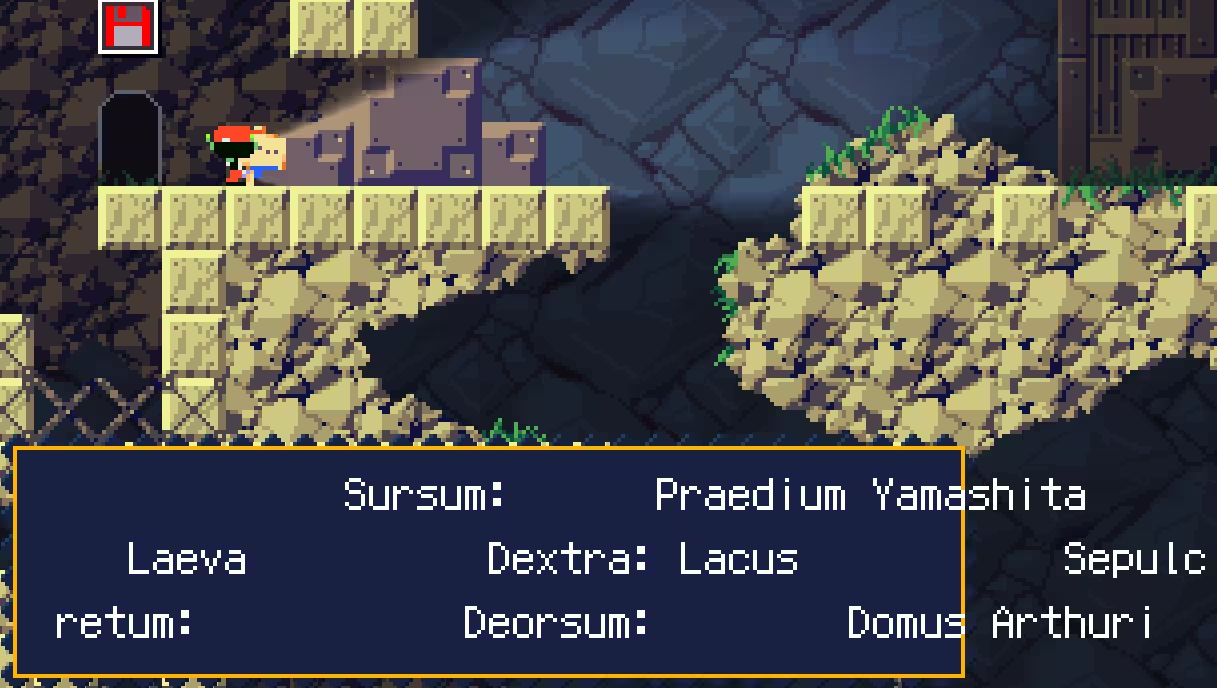
For more tricky formatting, it's, uh… not perfect! Oh well. This is a not unexpected weak point for an LLM.
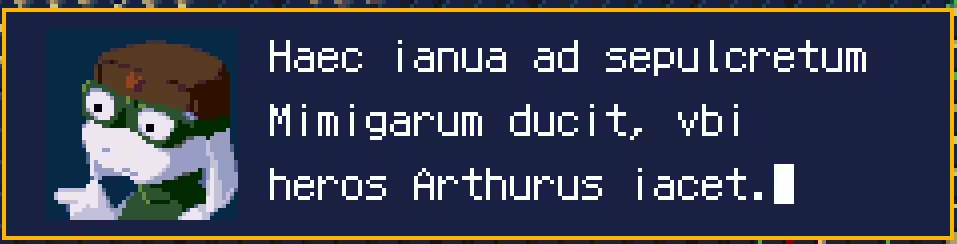
Funnily, it doesn't always adhere to its own (rather straightforward)
style guide. Here it uses u to represent the consonantal use of the
semi-vowel, rather than v as it should. It does this every so often
throughout the whole game, oddly.
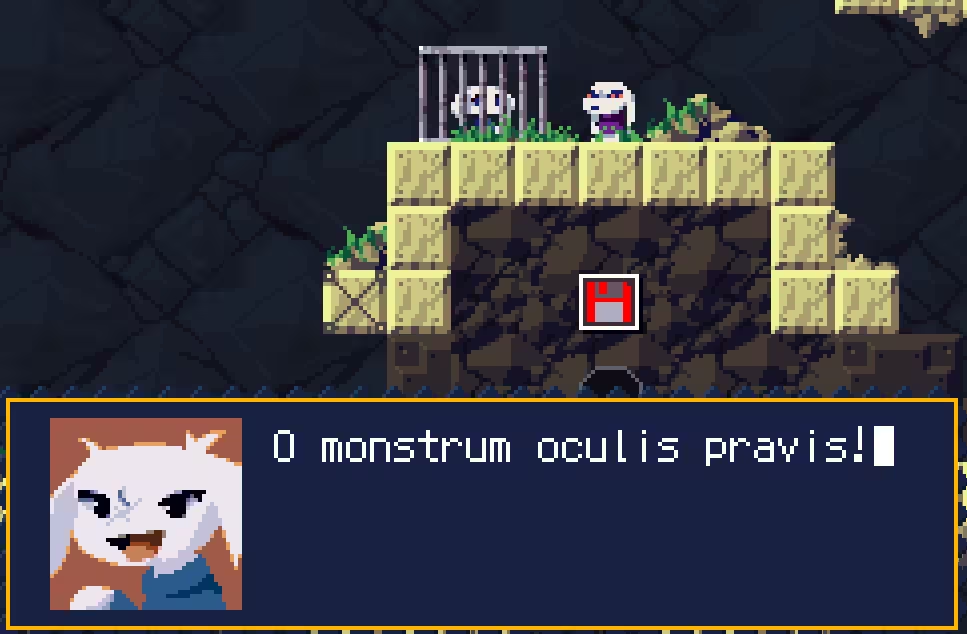
If you ever need a good Latin insult, this one's not bad: it translates "creep-eyed freak" as (literally) "monster with crooked eyes." This uses a typical ablative of description to idiomatically render the original insult.
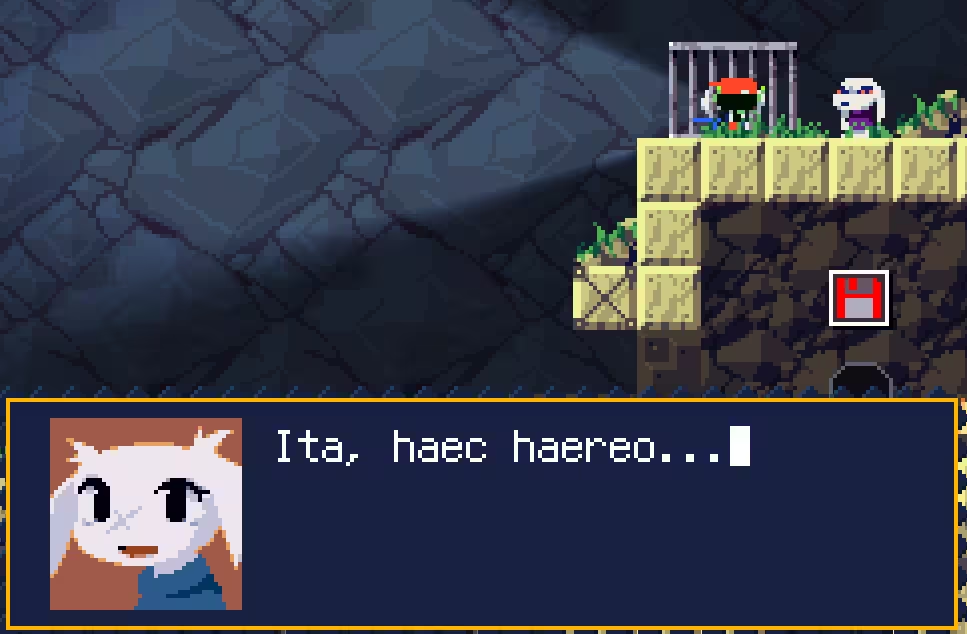
This translation of "Yup, I'm stuck…" looks a little odd, at least to my correctly aligned eyes. This puts haereo ("I am stuck") with an accusative plural haec ("these things"), while I've mostly seen haereo used with prepositions or an ablative. Indeed, Lewis & Short suggests that it is usually constructed "with in, the simple abl. or absol., less freq. with dat., with ad, sub, ex, etc." Thus I'm tempted to say that this is an error, but there's potentially an argument for this being an informal style that drops the preposition.
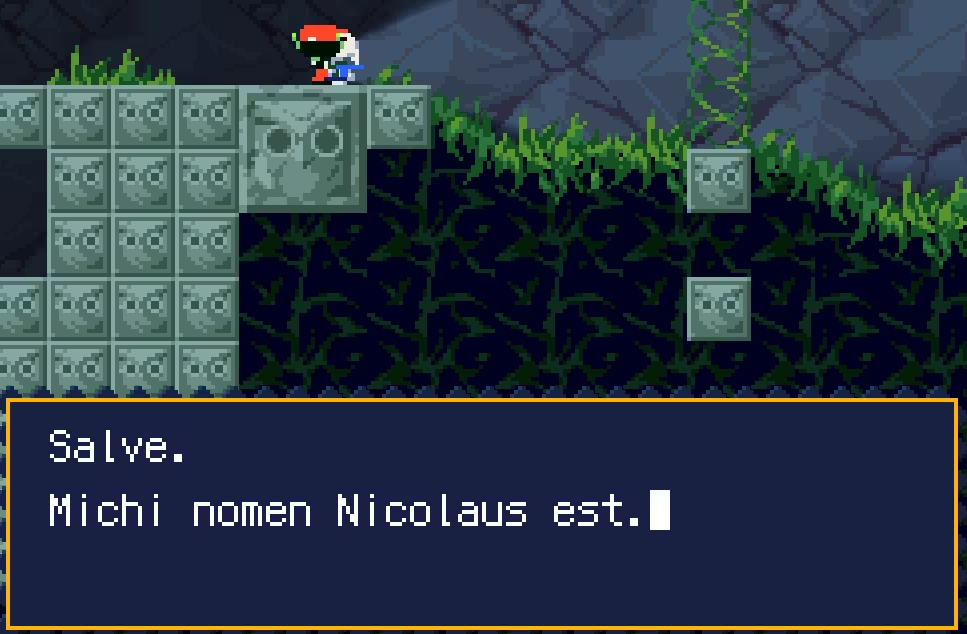
"Santa" gets translated as Nicolaus (whence "St. Nicholas"), which I think is fun. Also, his dialogue here taught me that michi is a Late Latin form of mihi, which is cool! I'm guessing that this later form is used because of his name, which is actually a pretty funny detail.
Unfortunately, the LLM flat-out hallucinates a noticeable amount. Here are some of the more egregious mistakes I came across.
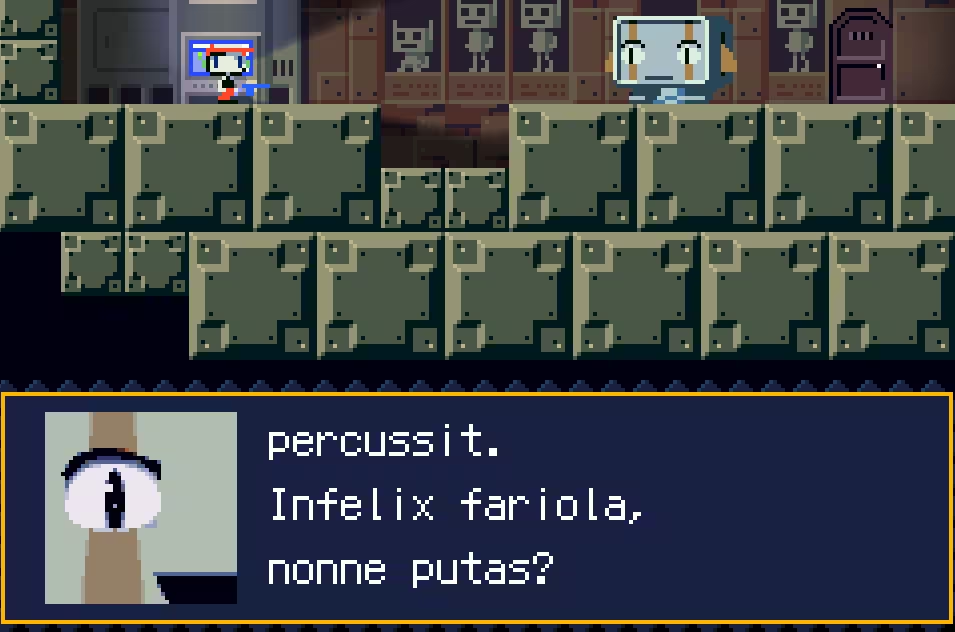
The LLM translates "poor girl" as infelix fariola, but the latter word is nonexistent. My best guess is that it was going for filiola ("little daughter"), but for whatever reason it spat out this gibberish instead. Strange.
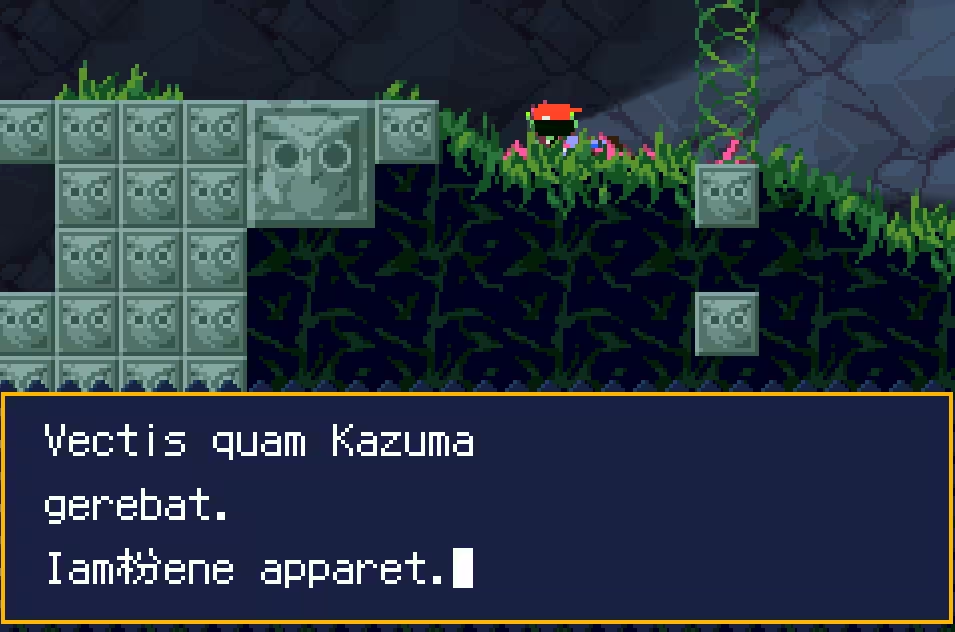
Sometimes odd Unicode errors like this happen.
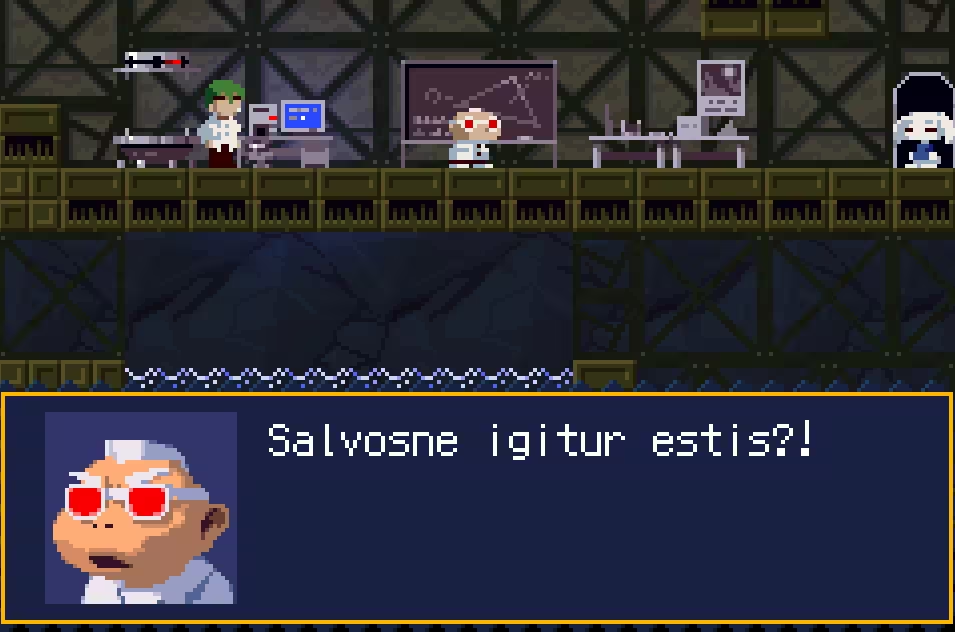
This is a basic morphological error that even a beginner student could catch. The verb sum ("I am") takes a nominative subject, as is the typical case in most languages. However, the LLM somehow writes salvos ("safe") in the accusative, rather than the expected nominative salvi. Although in this case it should actually be a singular feminine salva, as he's only speaking to Sue, I'll cut the LLM some slack for not having much context.
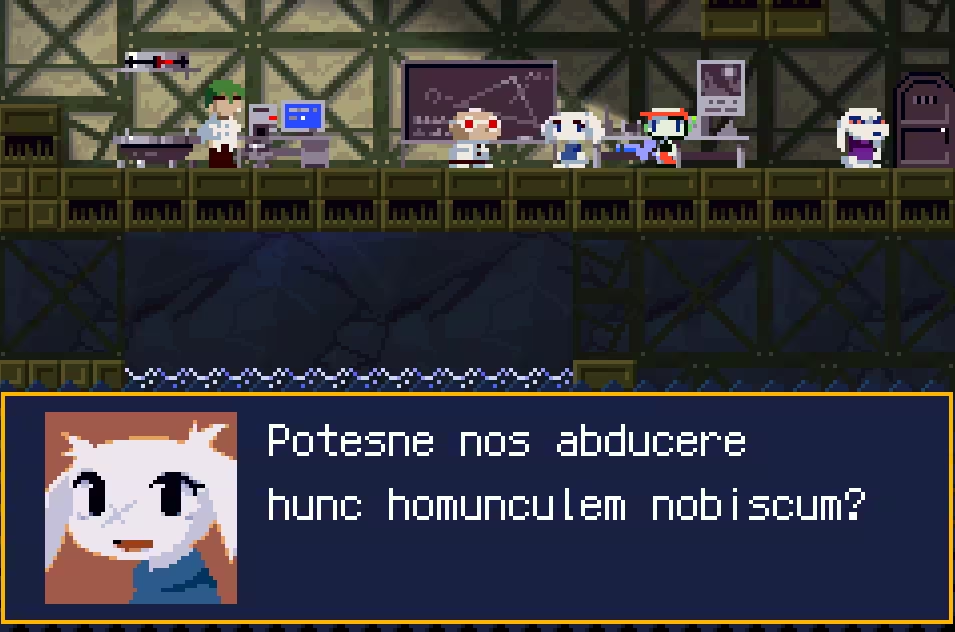
This is actually quite funny – Sue calls the player a homunculus as a translation for "little guy." Unfortunately, this sentence is a morphological and syntactic disaster. First of all, the accusative singular of that word is homunculum, not homunculem. The original sentence is "[c]an we take this little guy with us when we go?" but the Latin works out to something like "are you able to lead us away this little guy with us?" This is complete gibberish. I'm guessing it intended something like "possumusne nos," but for whatever reason tripped up the subject-verb agreement.
Overall, the LLM displays totally adequate translation skills at times, but it's wildly inconsistent. The high points are quite high – it can choose very apt idiom and its best translations are honestly pretty clever. However, its low points are nearly incomprehensible. Now, many of these problems would probably be minimized with additional revision passes and maybe the use of a heavier LLM. Even so, I feel mostly done with this project. I think there are some fundamental limitations with auto-localization of this sort that seem very hard to resolve – such as the lack of context embedded in these dialogue files. As it stands, it's simpler to have a human editor for revisions.
Thus I conclude that LLMs have not solved translation, but they seem very competent aids in the task. This project has already provided a decent foundation for revision that could yield a product quite useful for learners like me. I maintain that video games can be genuinely helpful pedagogical aids in language learning, but the difficulty of their translation combined with the relative lack of popularity of their intersection with classical languages makes this a difficult avenue to explore. Perhaps LLMs can be a way to make the barrier of entry a little lower and improve the state of language pedagogy for everyone.
Thanks for reading. You can find the code for this project on my Github.
Footnotes:
I would have probably used Google's API (whichever one it is this month) if not for their age verification shenanigans. Luckily, OpenRouter is quite convenient and probably better overall, so it's a good thing necessity drove me to it. Thanks for being being hard to use, Google!